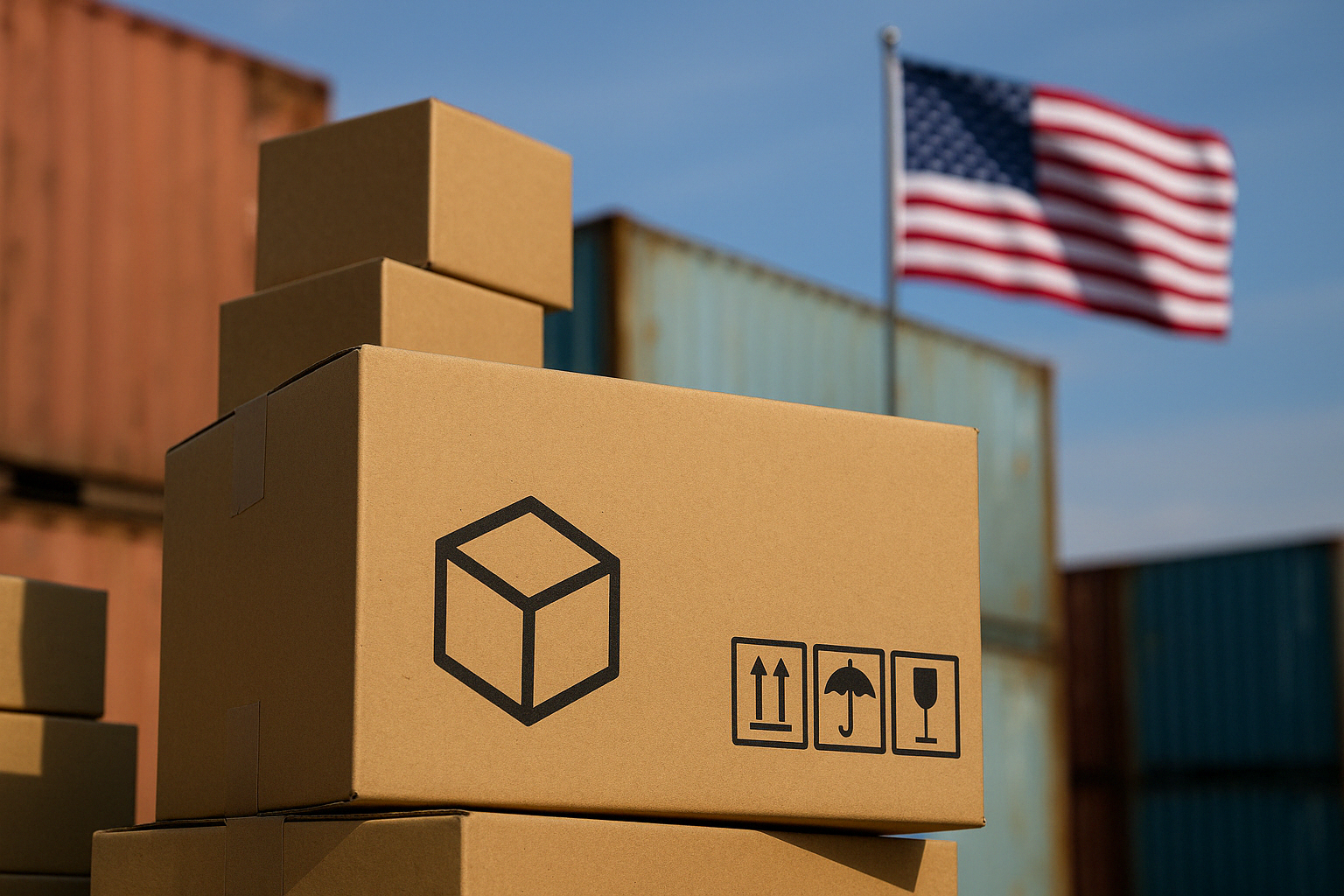
In a significant policy shift with global implications, U.S. President Donald Trump signed an executive order on April 2, 2025, eliminating the de minimis exemption for shipments from China and Hong Kong. The exemption had previously allowed imports valued under $800 to enter duty-free, fueling the rise of Chinese e-commerce giants like Shein and Temu, and enabling platforms like Amazon to flood the American market with ultracheap goods.
The crackdown didn’t stop there. A follow-up executive order, issued on April 9, 2025, imposed steep new tariffs specifically targeting e-commerce goods from China. Effective May 2, all such shipments will be subject to a 120% ad valorem duty. In addition, per-item duties will increase in stages—from $75 to $100 in May, and then to $200 starting June 1.

Notably, the de minimis privilege remains intact for other countries—at least for now. However, the U.S. administration has hinted at further restrictions, signaling a narrowing window for others to gain market share in the world’s largest consumer economy.
India’s E-Commerce Crossroads
For India, this policy pivot presents a rare and potentially game-changing opportunity. With over 100,000 online sellers and approximately $5 billion in current e-commerce exports, India is uniquely positioned to fill the gap left by China. Indian sellers, particularly in sectors like handicrafts, fashion, and home decor, are well-equipped to cater to U.S. consumers looking for affordable, small-batch alternatives.
However, capitalizing on this moment requires urgent action. India’s trade infrastructure is still largely built for traditional, large-scale exporters—not for the high-volume, low-value nature of online commerce.

Banking Bottlenecks
Banking regulations and practices are among the biggest barriers for Indian e-commerce exporters. Under current RBI guidelines, only a 25% difference is allowed between the shipping invoice value and the final payment received—a rule that doesn’t reflect the reality of online trade, where returns, platform fees, and discounts often create greater gaps. Raising this threshold to 100% and empowering banks to approve legitimate variances would ease the burden on small sellers.
Additionally, high reconciliation charges—ranging from ₹1,500 to ₹2,000 per shipment—can consume a significant share of low-value exports. These fees should be waived for e-commerce exports, and banks must adopt fully digital systems with strict service timelines and grievance redressal mechanisms.
Customs in Need of a Digital Makeover
India’s customs systems also need urgent modernization. Small exporters often face delays and uncertainty due to outdated processes. Automated, 24/7 digital inspections, simplified documentation, and seamless courier-mode handling—especially for shipments under Delivered Duty Paid (DDP) terms—are essential to ensure timely deliveries and customer satisfaction.
Access to Affordable Credit
Another major pain point is credit access. Unlike large exporters, small online sellers often face loan interest rates of 12–15% and are excluded from public credit support programs. Bringing them under the umbrella of priority sector lending and extending purchase-order based financing schemes could unlock vital working capital.
Leveling the Playing Field with Incentives
Courier-mode shipments—a preferred method for small e-commerce exports—are currently excluded from key incentive schemes like RoDTEP, Duty Drawback, and Advance Authorization. Extending these benefits to all qualifying exports, regardless of shipping mode, would help Indian sellers stay competitive globally.
Time is Ticking
In 2024 alone, over 1.4 billion low-value parcels entered the U.S., with China accounting for $46 billion worth of such goods. With Chinese shipments now facing steep duties, India has a fleeting chance to step up.
But the window may not stay open for long. To seize this moment, India must move swiftly to overhaul its trade support framework—making it inclusive, agile, and digitally enabled.
The global e-commerce landscape is shifting, and with the right reforms, India can lead the next wave of export-driven growth—one small parcel at a time.