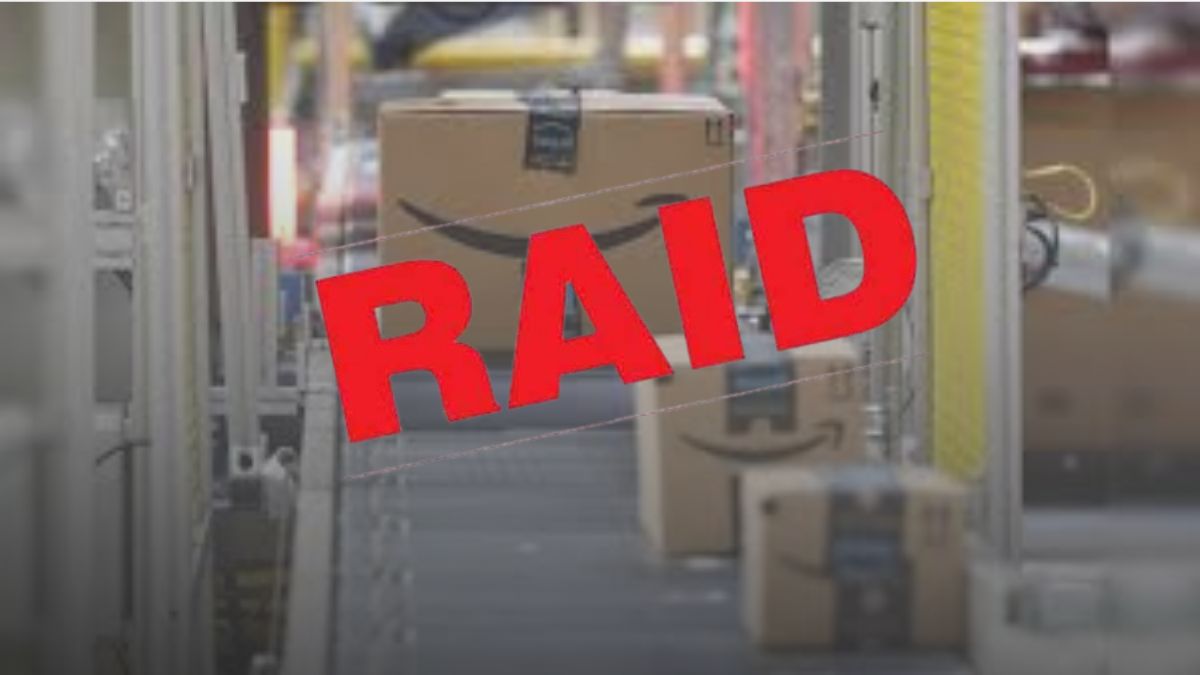
Indian e-commerce Giants have once again landed in the spotlight—but for all the wrong reasons. A series of high-profile raids conducted by the Bureau of Indian Standards (BIS), India’s state-run product certification agency, across warehouses operated by e-commerce giants Amazon and Flipkart has brought attention to quality control issues in India’s booming e-commerce sector.
The Raids: What happened?
On March 19th, BIS conducted extensive search and seizure operations at Amazon and Flipkart facilities in Delhi. The raids targeted warehouses for non-compliance with mandatory quality standards under the BIS Act, 2016, which requires certain products to bear the ISI (Indian Standards Institute) mark to ensure safety and quality.

Amazon:
BIS did a 15-hour operation at Amazon Sellers Pvt. Ltd.’s warehouse in Mohan Cooperative Industrial Area, Delhi.
Items Seized: More than 3,500 electrical products, including geysers, food mixers, and other appliances.

Value: Approximately ₹70 lakh (around $81,561 USD).
Issue: Products either lacked the mandatory ISI certification or bore fake ISI labels, violating quality control regulations.
Flipkart:
BIS conducted an extensive raid in Instakart Services Pvt Ltd, Trinagar.
Items Seized: 590 pairs of sports footwear, valued at around ₹6 lakh (approximately $7,000 USD).
Issue: Footwear lacked the required ISI mark and manufacturing date details, rendering them non-compliant.
Tamil Nadu Raids
Just a few days before the Delhi raid, BIS conducted a similar raid in Tiruvallur district, Tamil Nadu, near Chennai, targeting warehouses in Puduvoyal (Amazon) and Koduvalli (Flipkart).
Amazon (Puduvoyal):
Items Seized: 3,376 uncertified products, including insulated flasks, food containers, metallic water bottles, ceiling fans, and toys.
Value: ₹36 lakh.
Issue: Products stored and sold without the BIS standard mark.
Flipkart (Koduvalli)
Items Seized: 286 packs of baby diapers, 36 boxes of casseroles, 26 stainless steel water bottles, and 10 insulated steel bottles.
Issue: Lack of BIS certification.
These recent raids follow a pattern of enforcement actions. Earlier in February, a raid in an Amazon warehouse yielded 58 aluminum foils, 34 metallic water bottles, 25 toys, 20 hand blenders, 7 PVC cables, 2 food mixers, and 1 speaker—all uncertified. And a Flipkart warehouse run by Instakart Services Pvt Ltd saw 534 stainless steel bottles, 134 toys, and 41 speakers seized.
Then, on March 7th, BIS confiscated 215 toys and 24 hand blenders from an Amazon facility in Lucknow.
In the past month, BIS has seized over 4,000 substandard items from Amazon and Flipkart warehouses in Delhi alone, with additional thousands confiscated nationwide.
Why the raids?
BIS is on a mission to enforce compliance with India’s quality control orders (QCOs), which mandate certification for products like electrical appliances, footwear, toys, and more. To do so,, the agency is vigilant about e-commerce platforms, which have faced criticism for hosting sellers who bypass these standards.
Another reason is concerns for consumer safety, as uncertified products pose risks—faulty electrical goods could cause fires, while substandard toys or footwear might harm users. And, with the Indiandian e-comm market valued at $57–60 billion in 2023 and projected to hit $160 billion by 2028 (per Bain), Bain), the need to protect consumers and manufacturers grows.
Previous violations have also led BIS to escalate its efforts. Investigations traced many non-compliant products to suppliers like Techvision International Pvt Ltd. Raids on Techvision’s Delhi facilities uncovered thousands of uncertified items, including 7,000 electric water heaters and 4,000 food mixers.
E-Commerce Companies’ Response
Both Amazon and Flipkart have asserted that they, being a marketplace, have put in efforts to make sellers comply with the law and policies.
A spokesperson emphasized that Amazon has pledged to remove non-compliant listings and engage with regulators.
On the other hand, Flipkart highlighted its efforts to educate sellers on compliance, though it has not detailed specific actions post-raid.
However, these trades indicate that a tougher regulatory environment is required for Amazon and Flipkart, which dominate India’s online retail space.
Moreover, the seller or small vendors supplying to these platforms will need to be more vigilant in meeting certification requirements, which might be more challenging down the line, potentially shaping the e-commerce supply chain.
What’s Next?
The BIS operations in Delhi, Tamil Nadu, Gurugram, Lucknow, and beyond suggest this is not a one-off event but a sustained campaign. Notices have also been issued to other platforms like Meesho, Myntra, and BigBasket, hinting at a wider net. For Amazon and Flipkart, the challenge will be balancing growth with compliance in a market where speed and scale have often outpaced regulation.
This deep dive reveals a pivotal moment for India’s e-commerce giants—one where quality control is no longer optional but a non-negotiable standard. As of today, March 27, 2025, the story is still unfolding, with potential ripple effects on how online shopping operates in India.