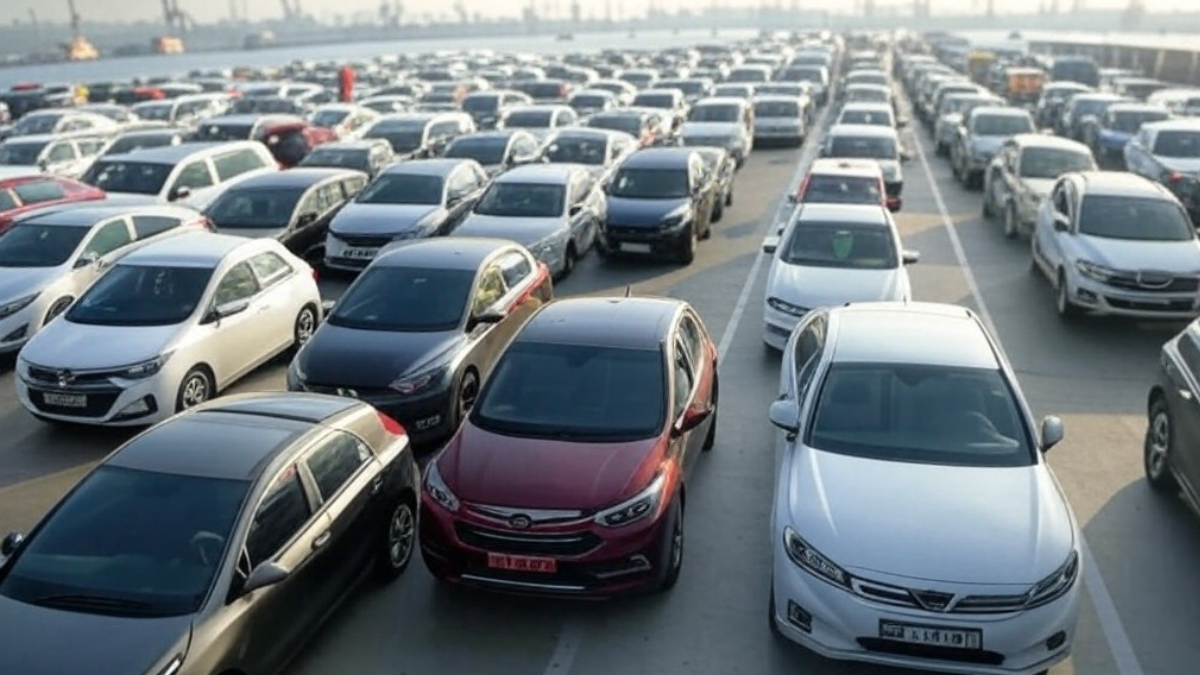
The US government’s decision to impose 25% tariffs on auto imports, including components, has sparked concerns across the global supply chain, with India’s automotive sector bracing for potential disruptions. While finished vehicle exports from India to the US remain minimal, the auto component industry—valued at $6.9 billion in exports—could face significant headwinds.
Industry leaders emphasize that India must re-evaluate its trade policies and take proactive steps to fortify domestic manufacturing. In an interview with CNBC-TV18, Rajeev Chaba, CEO Emeritus of JSW MG Motor India, highlighted the complexity of global supply chains, where no single country produces all components. “The entire concept of value addition is now under scrutiny. This is a wake-up call for India to assess its policies and strengthen local production,” he said.

The impact on Indian suppliers could be substantial. Companies such as Bharat Forge, Sona Comstar, and Samvardhana Motherson rely heavily on US exports. While the exact HS codes affected remain unclear, Pankaj Chadha, Chairman of EEPC India, warned that the auto component sector may follow the steel industry, which suffered a $5 billion hit due to similar tariffs.
With reciprocal tariffs expected, industry leaders stress the need for a balanced approach that fosters job creation and fair trade. Venkatram Mamillapalle, MD of Renault India, said that while passenger vehicle exports to the US are limited, the component industry was poised for growth and now faces uncertainty.
However, the situation also presents a strategic opportunity. Chaba believes that India can turn this challenge into an advantage by strengthening the ‘Make in India’ initiative, optimizing tariffs, and implementing non-tariff barriers to support local manufacturers and reduce external dependency.

As global trade dynamics shift, India’s ability to adapt its policies and strengthen its supply chain resilience will determine whether these tariffs become a setback—or a turning point for its automotive sector.