Trade between India and Bangladesh has been a cornerstone of economic cooperation, with significant growth in recent years. In the previous fiscal year, India’s exports to Bangladesh reached approximately USD 12.20 billion, marking a substantial increase from USD 10.63 billion the year before. Key exports included refined petroleum, cotton yarn, and various engineering goods.
On the other hand, Bangladesh exported around USD 2.02 billion to India, with major exports including ready-made garments (RMG), cotton fabrics, and jute products. The total trade turnover between the two countries in FY23 was approximately USD 14.22 billion. India remains Bangladesh’s largest export destination in Asia, while Bangladesh is India’s second-largest export partner in the region.

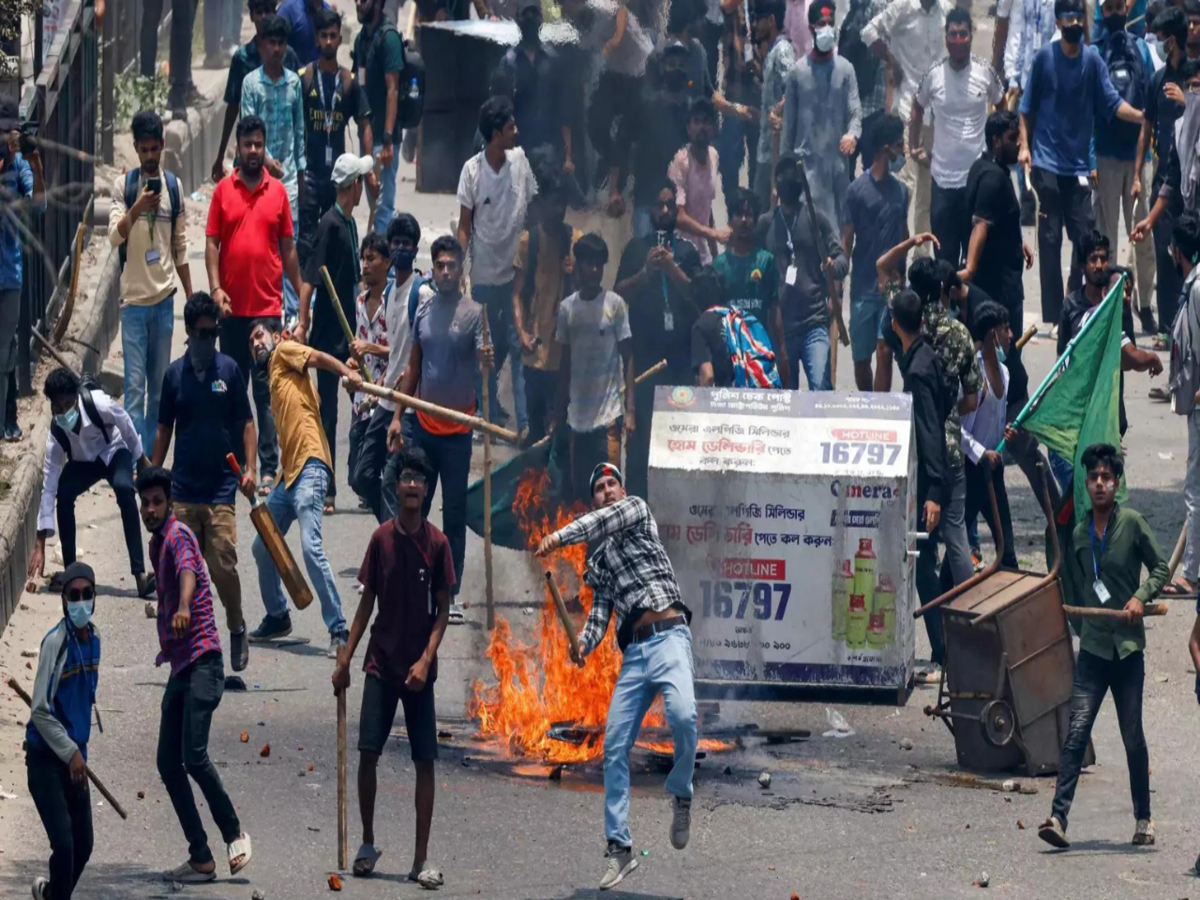
This flourishing bilateral trade has come to an abrupt halt due to recent unrest in Bangladesh. This halt has significantly impacted the bustling land ports of Hili and Petrapole, causing substantial economic repercussions and stranding hundreds of cargo trucks. The disruption comes at a critical time when bilateral trade between the two nations has been flourishing, with significant economic exchanges and increasing trade volumes.
Hili Land Port
At the Hili International Land Port, the usually busy trade activities have been completely halted. With nearly 200 trucks stranded along the National Highway (NH) 512 at Balurghat-Hili, the economic impact is becoming increasingly severe. The Hili port primarily facilitates the import of onions, green chili, and stone chips from India into Bangladesh.
On Saturday, a partial resumption of trade saw only 89 trucks crossing into Bangladesh by evening, a sharp decline from the usual 150. By Sunday, all import-export operations had ceased entirely. The curfew in Bangladesh and the internet shutdown have exacerbated the situation, making communication with importers impossible and further straining the trade.

Subrata Saha, a member of the Hili Exports Association, expressed concerns over the halted trade, emphasizing the difficulties in communication due to the internet shutdown. Ranjit Biswas, Superintendent of Hili Customs, highlighted the severe impact on businesses, while Dhiraj Adhikari, Joint Secretary of the Hili Exports Association, warned of potential losses amounting to several crores if the disruptions continue.
Amidst the unrest, the safe return of approximately 322 students from India and Nepal via the Hili border was ensured by Bangladeshi authorities, providing some relief to families.
Petrapole Land Port
The Petrapole land port, the largest in South Asia and a critical trade point located about 82 km from Kolkata has also experienced significant disruptions due to the ongoing student protests in Bangladesh. Nearly one-third of land-based trade between India and Bangladesh occurs through Petrapole, making the halt particularly impactful.
With around 700 trucks stranded and Bangladeshi Customs declaring a two-day holiday, trade has come to a near halt. The usual movement of 400–450 trucks from India and 150–200 trucks from Bangladesh has ceased. Despite the halt in cargo movement, passenger movement continues, with many students returning due to security concerns.
Ujjal Saha, Secretary of the West Bengal Exporters’ Coordination Committee, noted that other land ports like Gojadanga, Fulbari, and Mahadipur are also affected. The disruptions have led to a significant backlog of trucks, with cargo trucks that crossed over to Bangladesh from Mahadipur port still not returning.
Indo-Bangla trade analyst Sagar Khastagir remarked that trade was already low due to economic factors and the monsoon, but the unrest has severely worsened the situation. Exports via waterways have also reduced significantly, primarily affecting commodities like fly ash, crucial for cement production in Bangladesh.
Conclusion
The ongoing unrest in Bangladesh has profoundly impacted cross-border trade with India, causing economic losses and operational disruptions. The halt in trade at major land ports like Hili and Petrapole underscores the need for stability and communication to ensure the resumption of these critical economic activities.
As the situation develops, traders and authorities remain hopeful for a swift resolution to mitigate the financial damages and resume normal operations. Interrupting a trade relationship valued at over USD 14 billion highlights economic interdependence and the urgent need for measures to restore stability and facilitate trade flows.