The Indian express industry is on a remarkable growth trajectory, expanding from a market size of USD8–8.5 billion in FY24 at a CAGR of 15-17%. Once seen merely as a rapid delivery arm for time-sensitive goods, the sector has transformed into a strategic enabler of economic growth, creating millions of jobs and ensuring resilient supply chains.
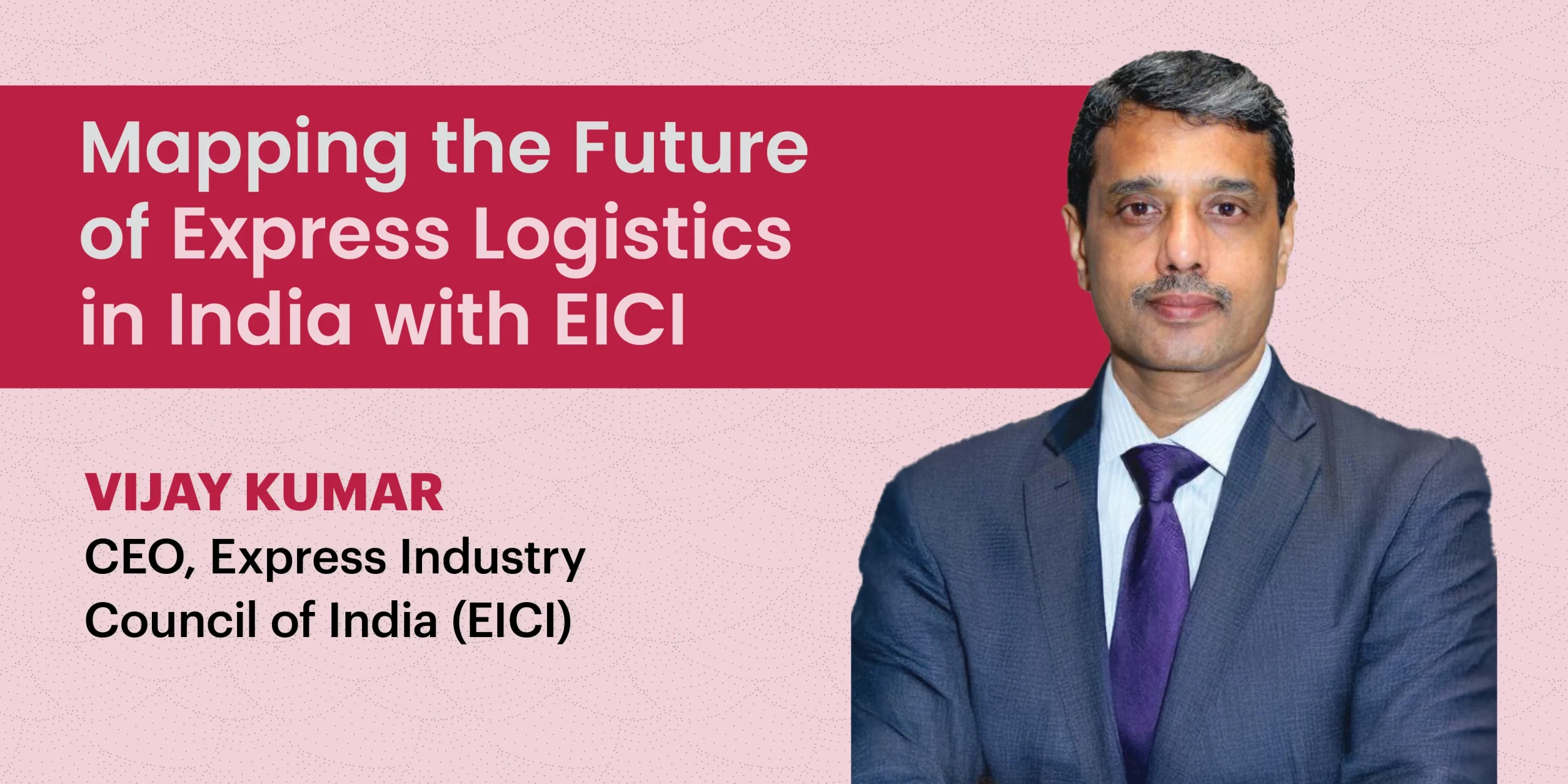
In this exclusive interview, we speak with Vijay Kumar, CEO, Express Industry Council of India (EICI), to explore the industry’s growth drivers, the growing role of AI in optimizing deliveries, reducing fraud, managing returns, sustainability initiatives, and more. This conversation offers an in-depth look at how EICI is steering the express industry toward a future that is agile, sustainable, technology-driven, and globally competitive.

Discuss the projected growth of the Indian express industry, previously estimated at a 17% CAGR to reach INR 48,000 crore by 2023. How has the industry evolved since, and what are the key drivers for 2025 and beyond?
The express industry in India, with a market size estimated at 70,000 crores–75,000crores (USD 8–8.5 billion) in FY24, has a growth rate of 15–18 percent CAGR (FY17–24). The industry, which served just as an arm for companies facilitating the rapid transportation of time-sensitive goods, has witnessed a notable transformation in the last decade. The advent of e-commerce, growth of MSMEs, increasing customer preference for time-bound deliveries, and technology advancements were game changers in the growth story of the express industry,
Moreover, the segment played an integral role in the economic recovery of India, ensuring resilient supply chains and navigating the challenges posed by the COVID-19 pandemic and other economic uncertainties. Ensuring reliable and time-bound logistics services, the express industry is positioned in the frontline fleet of the Indian economy, significantly contributing to employment, tax revenues, and overall economic growth.The express industry in India is estimated to employ about 2.8–3.0 million people directly and indirectly. The industry’s contribution to employment generation has nearly doubled in the last seven years.

The manufacturing sector, digital penetration, consumer preference towards online shopping, and the shift of traditional enterprise business to a direct-to-customer logistics service model are driving the industry. The growth in B2B and B2C movement has enabled the industry to grow along with other high-growth segments like e-commerce and quick commerce, etc.
How is EICI collaborating with Indian Customs to enhance the Electronic Express Clearance System, and what impact does this have on global competitiveness?
Implementation of the Express Cargo Clearance System (ECCS) has simplified and smoothened customs clearance processes at airports. The international express cargo sector has witnessed a significant improvement in performance since the implementation of ECCS. EICI, jointly with the Indian Customs, had developed the Express Cargo Clearance System, which is a state-of-the-art paperless electronic system that has received multiple awards and has also been appreciated by all stakeholders.
Meanwhile, EICI has already started its interactions with the Systems team on the proposed Customs Integrated System, which Customs is developing. EICI, along with the Bureau of Research on Industry and Economic Fundamentals (BRIEF), has published a white paper on the proposed integrated system, deep diving into the existing capabilities and the strengths of the existing system (ECCS) and outlining the requirements of the industry from the proposed system. The white paper was released in May by Shri Yogendra Garg, Member IT, CBIC, and is being very well accepted by the stakeholders.
How is the adoption of AI reshaping the express industry, and what steps is EICI taking to ensure its members stay ahead in the AI-driven digital economy?
Express logistics providers are increasingly utilizing AI and ML to optimize operations and offer value-added services. Reverse logistics, which accounts for 20 percent of shipments, is becoming more prevalent, particularly in high-return categories such as fashion and beauty products. The complexity of handling returns, such as non-standard packaging, diversified pickup locations, and inconsistent scheduling, increases operating burdens significantly. Using predictive analytics can enhance inventory control and returns management, while pin-code analysis and AI-driven route optimization minimize delivery times. These technologies enable businesses to refine addresses and streamline the express industry, leading to cost efficiencies and better customer experiences.
For instance, express players started using predictive AI to produce a report on likely fraud alerts based on past customer experiences at the pin-code level. They try to identify these frauds, tracking the IMEI number of the mobile hardware instead of the phone number, to accurately identify, shortlist, and eliminate faulty orders and reduce the percentage of return shipments.
This is an abridged version of the interview published in the September edition of the Logistic Insider magazine. To read the complete interaction, click here.