The Economic Survey for 2023–24, tabled in Parliament on July 22, outlines the central government’s ambitious goals as part of the Maritime Amrit Kaal Vision 2024. A key objective is to increase the average ship’s daily output (gross tonnage) from 16,000 metric tons in 2020 to over 30,000 metric tons by 2030.
The survey provides an overview of the country’s economic performance over the past year and highlights several initiatives in the maritime sector.

The government port sector is leveraging the Sagar Setu application to streamline daily vessel and cargo operations, aiming to become a central hub for all maritime engagements. Recognizing the cost benefits of transporting goods through ports and inland waterways, the government is also focusing on enhancing inland water transport for large-scale cargo and passenger movement.
Union capital expenditure on ports, shipping, and waterways grew by 27% between FY23 and FY24. The survey underscores the importance of the shipping industry, noting that geopolitical tensions and export restrictions on food and fertilizer pose risks to India’s rising exports of goods and services. Additionally, attacks on shipping in the Red Sea and drought in the Panama Canal have led to re-routed trade flows, increasing journey time and costs. India’s merchandise trade relies heavily on maritime routes, and disturbances in major shipping pathways can impact the economy.
Under the Sagarmala national program, 262 projects worth Rs 1.4 lakh crore are completed, 217 projects worth Rs 1.65 lakh crore are under implementation, and 360 projects worth Rs 2.7 lakh crore are under development. The Inland Waterways Authority of India (IWAI) allocated Rs 1010.5 crore for capital expenditure in FY24. Technical interventions have been planned for safe navigation and shipping on 106 new national waterways.

The government has significantly boosted coastal shipping, increasing the gross tonnage from 1.19 million GT with 846 vessels in 2014 to 1.72 million GT with 1039 vessels in 2024.
The Economic Survey also highlights the impact of the Goods and Services Tax (GST) on reducing logistics costs. The “One Nation, One Tax” regime has significantly decreased truck wait times at state borders, reducing travel time by up to 30%. Consequently, the average distance trucks traveled increased from 225 km before GST to 300–325 km. This improvement has enhanced the ease of doing business and supported the growth of manufacturing.
A study by the National Council of Applied Economic Research (NCAER) showed a decline in logistics costs by 0.8 to 0.9 percentage points of GDP between FY14 and FY22. India’s position in the World Bank’s Logistics Performance Index (LPI) improved from 44th in 2018 to 38th in 2023 out of 139 countries, driven by reduced logistics costs and better trade facilitation. The introduction of cargo tracking has reduced dwell time in Visakhapatnam from 32.4 days in 2015 to 5.3 days in 2019, and the country’s ranking in international shipments improved from 44 in 2018 to 22 in 2023.
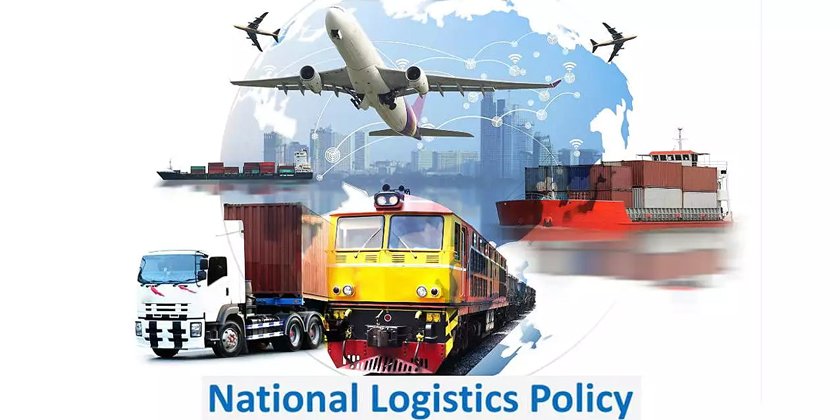
India aims to be among the top 25 countries on the LPI by 2030. Domestic manufacturing and export competitiveness have significantly improved due to PM Gati Shakti and the National Logistics Policy (NLP). The government utilized the PM Gati Shakti National Master Plan portal for network planning and congestion projections, leveraging big data from e-waybills and FASTag to estimate future transportation demand and enhance logistics efficiency. The survey highlighted India’s logistics improvements and set a roadmap for further advancements.
The Economic Survey, presented by Finance Minister Nirmala Sitharaman, emphasized the importance of continued investment and policy measures to strengthen India’s logistics and manufacturing sectors.