The Automotive Component Manufacturers Association (ACMA), the representative body of Indian auto component manufacturers, announced on Thursday that despite a surge in export demand, logistics remain a significant challenge. Geopolitical conflicts, particularly the Red Sea crisis, are disrupting the demand and supply chain for auto components.
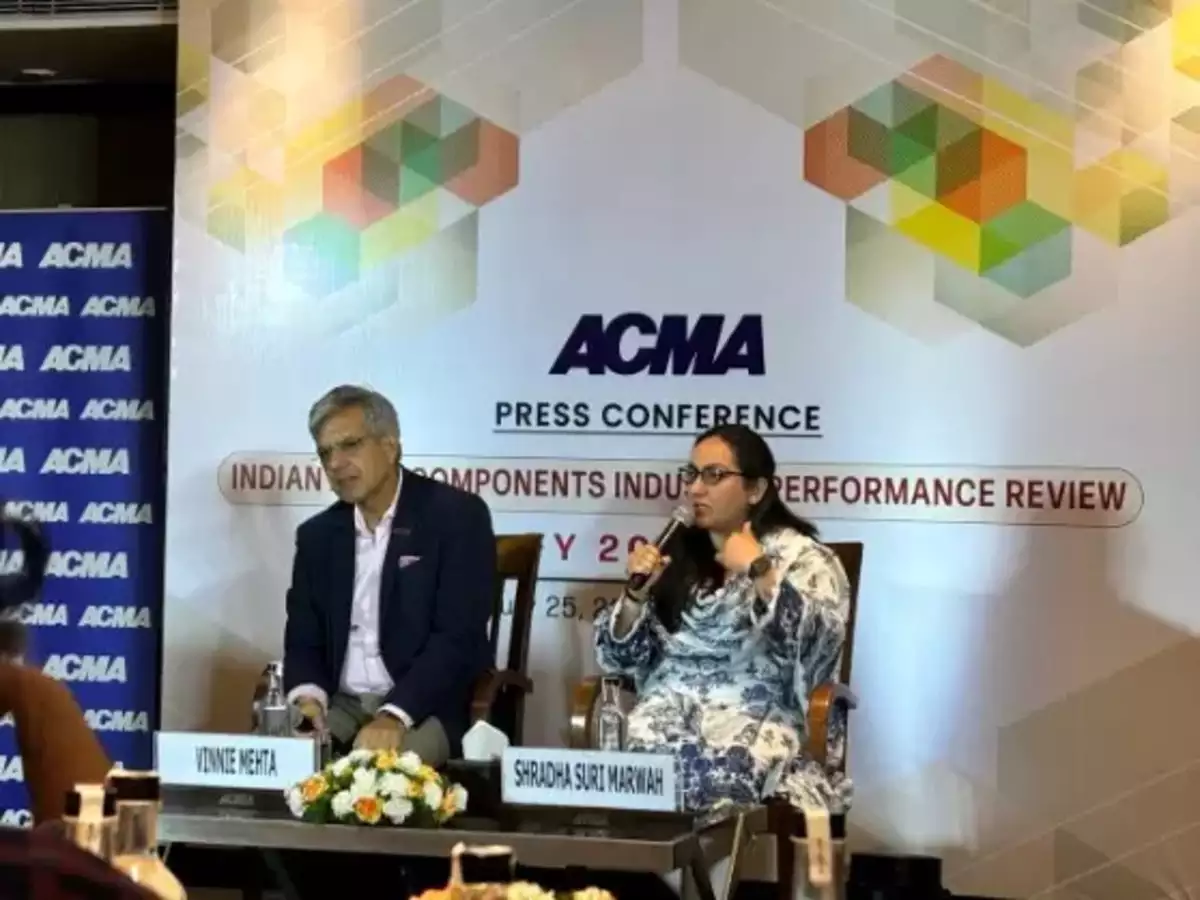
“The Red Sea, which handles nearly 30% of the world’s shipping container traffic, is currently facing a crisis that has led to the diversion of routes and congestion at alternative ports,” stated Shradha Suri Marwah, President of ACMA and CMD of Subros. “This crisis is directly impacting Indian automakers by increasing time, inventory, and export costs. The issues at the Red Sea and Singapore ports are causing delays, elevating the time to market and production, and increasing inventories, which in turn affects working capital.”

In response to these disruptions, companies are opting for alternative routes, such as through Singapore Port. However, the sudden surge in traffic at these alternative ports has led to delays of about 7 to 14 days in supply chain deliveries.
“Despite the overall merchandise export decline from India in FY24, auto component exports have grown amid geopolitical challenges and increased logistics costs,” Marwah noted. “Exports grew by 5.5% year-on-year to USD 21.2 billion, with significant contributions from North America (32%), Europe (33%), and Asia (24%). Drive transmission and engine components were the largest contributors to this export growth.”
Vinnie Mehta, Director General of ACMA, highlighted that India observed higher export growth compared to imports in FY24, indicating a positive outlook for the auto component industry. “Exports grew by 5.5% while imports increased by only 3%, reflecting the industry’s focus on localization,” Mehta said.

The aftermarket sector also saw significant growth, driven by increased demand in the used vehicle market and higher e-commerce penetration. The turnover for the aftermarket in FY24 reached USD 11.3 billion, up from USD 10.6 billion in the previous fiscal year. Supply of electric vehicles accounted for 6% of the industry’s turnover, double the previous fiscal year’s contribution.
During the press conference, Mehta introduced the ACMA Mobility Foundation, an initiative to foster innovation and collaboration with advanced technology startups. The industry faces tailwinds such as sustained domestic vehicle demand, infrastructure development, stable exports, and new entrants in the mobility space. However, challenges remain, including geopolitical issues, rising freight costs, and high GST rates on auto components.