India’s Union Budget 2026 has reinforced the government’s long-term logistics vision, placing strong emphasis on multimodal infrastructure, freight corridors, waterways, and port-led development. But beyond headline allocations, the bigger question for the industry is whether these initiatives will translate into measurable trade competitiveness and stronger financial viability for logistics players. In this interview with Logistics Insider, Mr Gayomard Driver, Group CFO at Jeena and Company, shares a finance leader’s perspective on the budget’s impact, investment priorities, multimodal transition challenges, MSME funding gaps, and how technology-led efficiency can drive sustainable returns across India’s evolving supply chain ecosystem.
From a finance leader’s standpoint, how do you read Budget 2026 in the context of India’s long-term logistics and trade ambitions? Does it provide enough visibility for capital planning in the sector?

The Union Budget was focused on the government’s long-term vision of the Viksit Bharat 2047, emphasising the country’s improved infrastructure and logistics operations. The focus on high public capital expenditure, multimodal infrastructure, freight corridors, waterways, and risk-mitigation mechanisms such as the Infrastructure Risk Guarantee Fund provides a long-term clarity of trade ambitions. This generates trust among logistics players for long-term planning for strategic investment.
While execution will be ongoing, such an announcement offers sufficient visibility for capital allocation in the sector, enhancing India’s trade and supply chains.
With renewed emphasis on freight corridors, waterways and port connectivity, how should logistics companies think about prioritising investments—capacity expansion versus efficiency and technology upgrades?

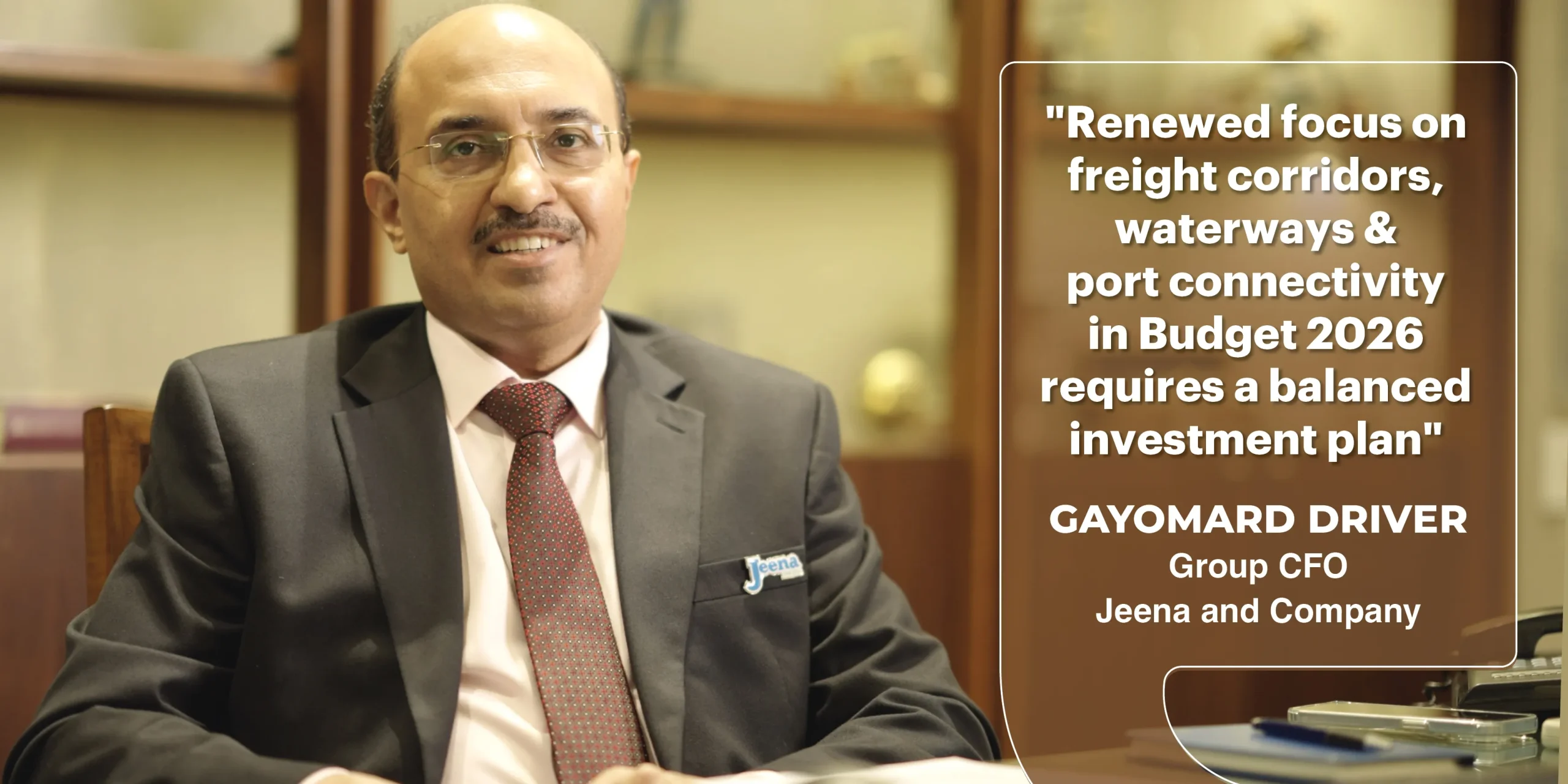
The renewed focus on freight corridors, waterways, and port connectivity in Union Budget 2026 requires a balanced investment plan and not a binary focus. While selective capacity expansion will be necessary to capture rising trade volumes, the greater and more immediate value lies in efficiency and technology upgrades.
Our focus should be investing in reliable and long-term gains like automation, data visibility, and holistic integration, which will improve asset utilisation and lower unit costs across multimodal networks. Capacity additions should therefore be demand-linked, while technology-led efficiency enhancements become the foundation for scalable and resilient growth as India’s logistics ecosystem matures.
Multimodal integration has been a recurring policy theme. From a cost and return perspective, what financial challenges do companies face while shifting freight to rail, coastal shipping or inland waterways?
While multimodal integration is still an important priority for policymakers, it also continues to create real financial challenges for companies and their respective supply chains, especially from a cost and return basis. By shifting freight from road to rail, coastal shipping or inland waterways, companies can reduce total logistics costs, since both rail and water generally have lower transport costs per tonne-kilometre than road freight. However, the initial investment required for new assets and digital connectivity is substantial.
For example, while inland waterways and coastal shipping operations are typically viewed as long-distance cost-effective alternatives, they require investment in ports, terminals, and cargo aggregation facilities to reach economies of scale. The fixed capital cost associated with these types of facilities can be significant compared to current volumes of freight being moved. Similarly, rail freight requires dedicated freight corridors and last-mile connections. Therefore, until the supporting systems that affect the operations of multichoice freight networks are fully functional, companies using these modes of transportation might face higher financing costs.
The data interface between the rail, road & coastal networks is not seamless and remains an important area for improvement. The gaps result in delays, resulting in additional financing costs. Consequently, logistics companies must employ rigorous capital planning processes, risk-mitigated investment strategies, and a focus on technology so that when multimodal integration does occur, the benefits of cost savings will be realised.
This is an abridged version of the interview published in the February edition of the logistics Insider Magazine. To read the complete interaction, click here.