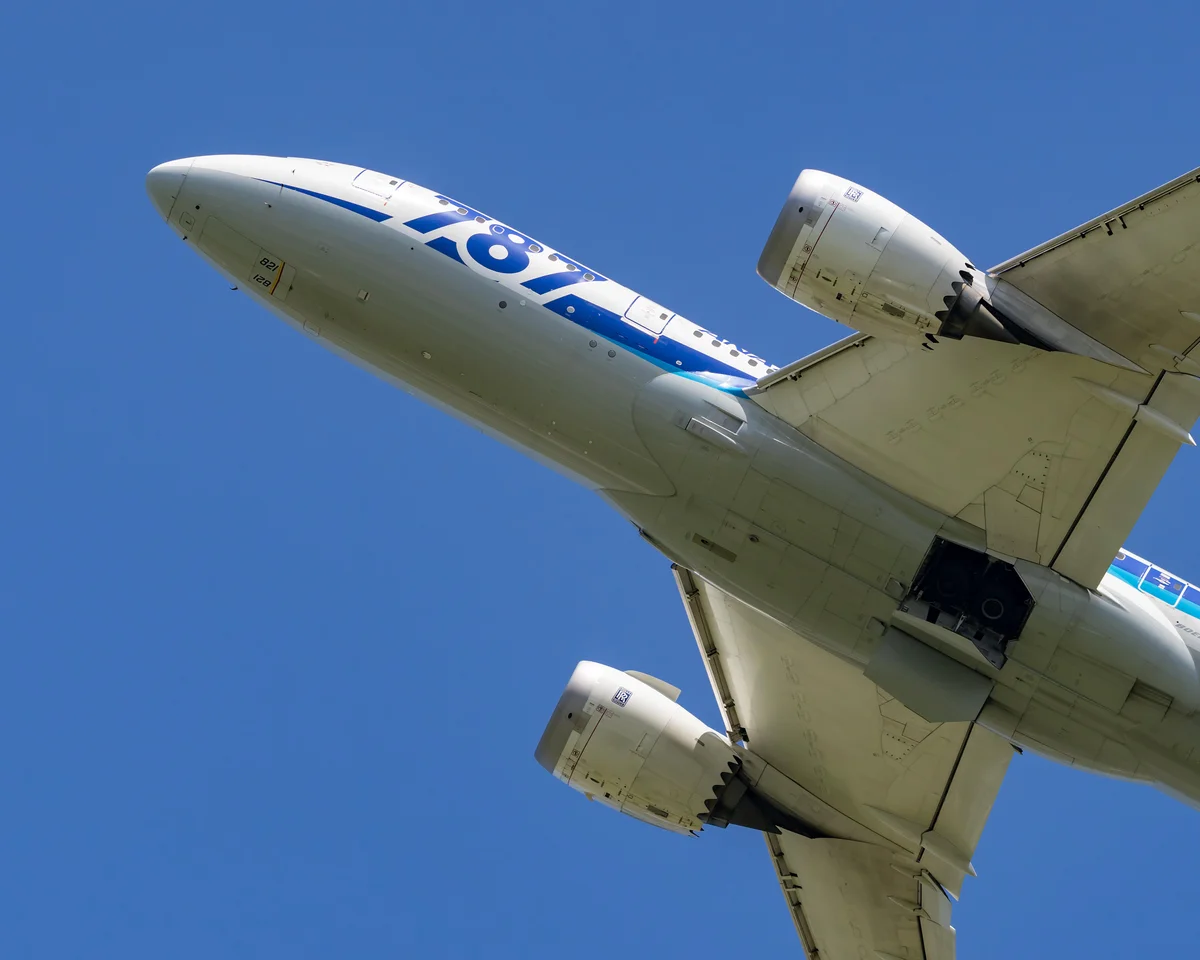
When Boeing unveiled the 787 Dreamliner, it was celebrated as a breakthrough in long-haul passenger aviation. With its composite fuselage, advanced avionics, and 20% better fuel efficiency compared to older aircraft like the 767, the Dreamliner was built to redefine air travel.
Today, however, more than a decade later, a new chapter is emerging. One that’s written in pallets, payloads, and performance.

Welcome to the rise of the Boeing 787 Passenger-to-Freighter (P2F) conversion.
Why the 787 Dreamliner Is Being Eyed for Cargo Conversion
Although no 787 P2F conversions are currently in active service as of June 2025, interest is rapidly growing across the aviation and logistics sectors. This shift is being driven by a combination of market dynamics, aircraft availability, and the technological edge the Dreamliner offers.
Key Drivers Fueling the Momentum:

Booming Air Cargo Demand
Since the COVID-19 pandemic disrupted global supply chains, e-commerce has surged. This has driven demand for efficient, long-range freighters. With the 787 offering 20% lower fuel burn than the Boeing 767, its appeal as a mid-size freighter is clear.
Aircraft Availability Post-Pandemic
The retirement of older fleets and the grounding of passenger aircraft during the pandemic have created a pool of relatively young 787s, ripe for repurposing. Rather than investing in new builds, many operators are exploring P2F conversions to optimize fleet utility and control costs.
Technological Advantages
The Dreamliner’s carbon-fiber airframe, long range (up to 7,530 nautical miles for the 787-9), and large cargo volume make it ideal for long-haul express routes. Its modern systems also reduce maintenance costs, enhancing its value as a freighter.
What’s Happening Now
Although a certified conversion program has yet to be launched, significant groundwork is underway.
Here are some current developments:
- Israel Aerospace Industries (IAI), a global leader in P2F conversions, is exploring the feasibility of a 787 conversion program.
- ST Engineering Aerospace, known for its work with 737 and 767 conversions, is reportedly assessing the 787’s potential.
- Industry analysts speculate that retrofitting could begin by mid-2025, with the first converted aircraft potentially entering service by 2027 or 2028.
However, no official certifications or launch customers have been confirmed. The market remains in a “watch and wait” phase, but growing buzz on platforms like X (formerly Twitter) reflects clear interest from carriers and leasing firms.
The Hurdles: Cost, Complexity, and Composite Challenges
Despite the Dreamliner’s strengths, several barriers remain:
- Conversion Cost: Estimated at $30–35 million per aircraft, the 787 P2F would rank among the most expensive conversions available.
- Composite Fuselage Challenges: Unlike traditional aluminum airframes, the 787’s composite structure requires specialized engineering to modify cargo doors, flooring, and load-bearing components.
- High Market Value: The 787 is still highly valuable as a passenger aircraft. Until more used units are available at lower prices, conversions may remain economically unattractive for some operators.
Recent Safety Concerns
In June 2025, an Air India 787-8 tragically crashed near Ahmedabad, marking the first fatal incident involving the Dreamliner in its 16-year service history. The incident prompted increased scrutiny of the aircraft, which may influence investor sentiment around P2F conversions.
However, initial inspections found no systemic safety issues. The Dreamliner continues to hold one of the strongest safety records among modern widebody aircraft.
Why the 787 P2F Could Be a Game-Changer
The cargo sector is resilient and future-oriented. And, as airlines, cargo operators, and lessors search for ways to optimize fleet economics, the 787 offers a rare trifecta: available feedstock, high performance, and untapped cargo potential.
- The 787-8 could offer an estimated 40–45 tons of payload, rivaling the 767-300F
- The 787-9 may approach the cargo capacity of a 777F while delivering lower operating costs
Its size and range make it ideal for long, thin routes such as trans-Pacific or trans-Atlantic lanes, where cargo demand is strong but doesn’t justify a full jumbo freighter. Operators such as FedEx, UPS, and DHL are potential candidates to lead the charge once programs are certified.
Meanwhile, Boeing is rumored to be developing a factory-built 787 freighter variant, possibly arriving by 2030. Until then, P2F conversions may serve as the faster, more affordable, and flexible alternative.
Final Boarding Call: The Dreamliner’s Second Act
The Boeing 787 Dreamliner isn’t just a marvel of modern passenger aviation. It may soon become a cornerstone of next-generation cargo strategy.
While no 787 has yet flown in a P2F configuration, the foundation is being laid. From feasibility studies to market speculation, the aircraft’s transition from passenger luxury to logistical powerhouse is gaining momentum.
The next time your international package arrives ahead of schedule, it might just have flown on a 787—not as a traveler, but as a tireless transporter. In aviation, reinvention is rare. But the Dreamliner might just be pulling it off.