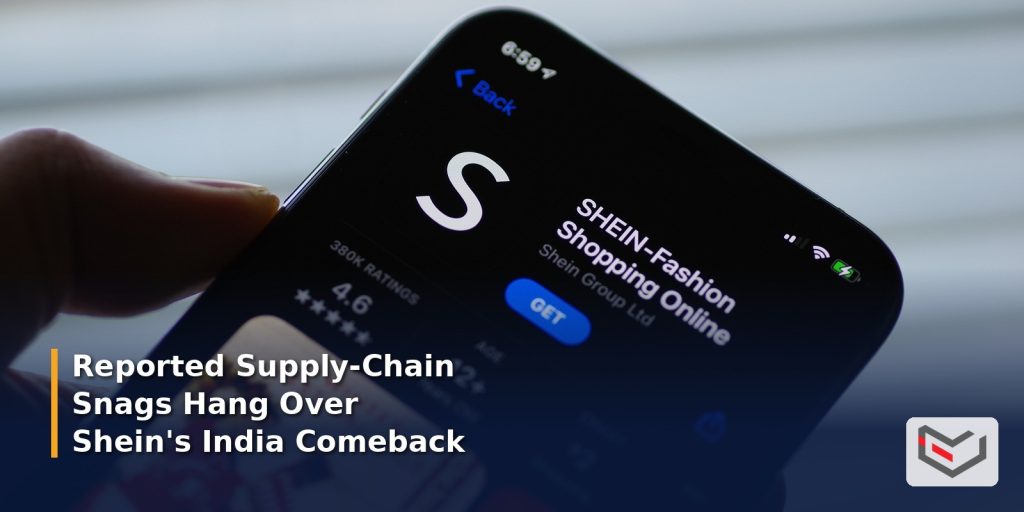
After a 5-year-long interval, Chinese fast-fashion brand Shein has made a comeback into the Indian market. Banned in 2020 over data privacy concerns, the brand, through a strategic partnership with Reliance Retail Ventures, was relaunched in the Indian market as the ‘Shein India Fast Fashion app’ on Feb 1, 2025, Saturday. Developed and hosted by Reliance Retail, the brand is offering a range of affordable apparel sourced and manufactured within India.
Moreover, the Shein India platform is hosted on infrastructure within the country, ensuring that all platform data remains in India. Shein will not have access to or rights over this data, with Reliance Retail maintaining full ownership and control, ensuring compliance with Indian data protection regulations, and aligning with national interests regarding data sovereignty.

Shein’s return isn’t just about re-entering the market—it marks a fundamental shift in its supply chain strategy. Here’s how it impacts the Indian textile and logistics sectors.
Implications for the Indian Textile and Logistics Sectors
The partnership between Shein and Reliance Retail is poised to have several implications for India’s textile and logistics sectors:
- Boost to Local Manufacturers: Nextgen Fashion, Reliance’s subsidiary overseeing Shein-branded production, plans to scale up its network of Indian manufacturers, positioning India as a future supply source for Shein’s global operations. This move not only aligns with India’s “Make in India” campaign but also creates substantial export opportunities for Indian MSMEs and garment manufacturers, boosting job creation and making Indian textiles more competitive worldwide.
- Enhanced Supply Chain Digitization: The collaboration aims to develop a localized model for digitizing the supply chain of Indian MSMEs and factories, enhancing efficiency and transparency in operations.
- Logistics Optimization: Domestic production will reduce lead times, optimize logistics, and minimize costs tied to international shipping and tariffs. This shift from importing finished products to domestic manufacturing represents a significant transformation in Shein’s supply chain strategy, making Shein’s supply chain more agile and responsive in India.
Shein’s comeback in India, facilitated by its partnership with Reliance Retail, signifies a strategic shift towards localized manufacturing and supply chain integration. This approach not only addresses past regulatory concerns but also positions both companies to capitalize on the strengths of India’s textile and logistics sectors, potentially setting a new standard for fast fashion operations in the region.