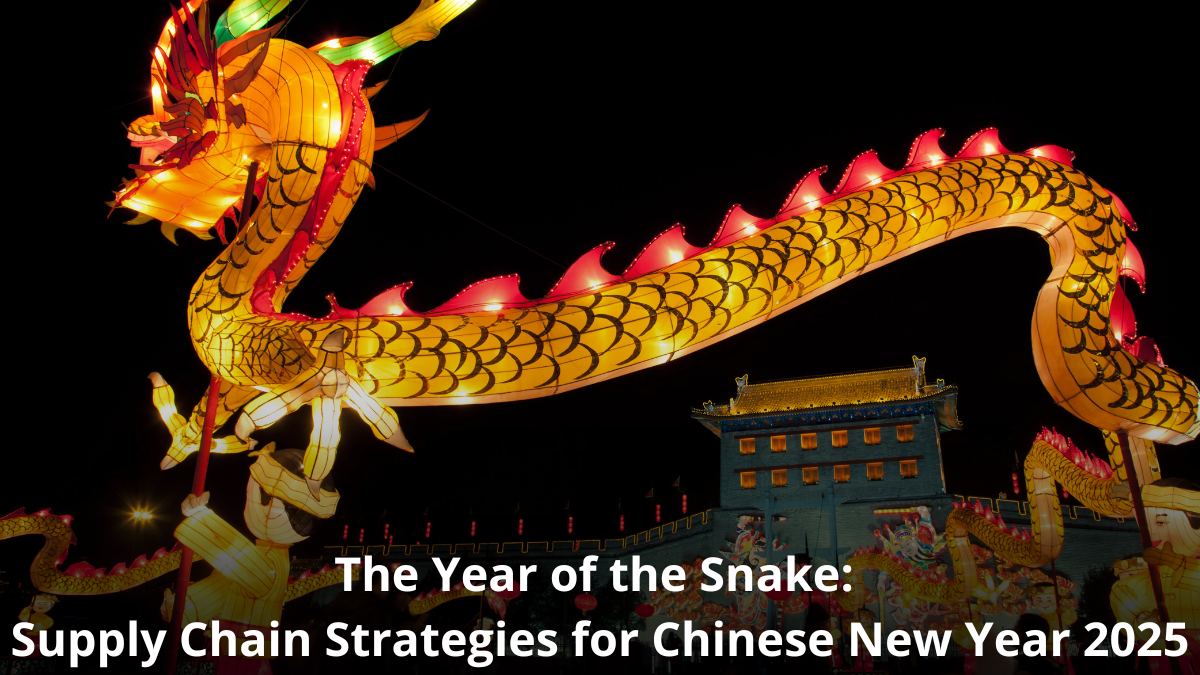
As Chinese New Year (CNY) 2025 approaches, global supply chains brace for their annual stress test. The festival is a logistical déjà vu for businesses as it brings weeks of factory shutdowns in China, causing ripple effects across industries, year-after-year. Companies worldwide are rethink their supply chain strategies to mitigate disruptions, ensure timely deliveries, and manage inventory levels efficiently.
Every year, the CNY celebrations see factories close for 2-3 weeks, with millions of workers travelling back home for the holidays. This shutdown often creates supply bottlenecks, with production halting and transportation networks strained due to increased demand before and after the break. Businesses dependent on Chinese manufacturing face potential delays and stock shortages. This year, the stakes are amplified with potential U.S. tariffs, looming labor strikes, and a weakening Chinese economy making proactive supply chain management essential.

CNY 2025: The Perfect Storm?
Let’s take a quick look into the several factors, making the CNY supply chain disruptions potentially more impactful:
- Potential U.S. Tariffs: The newly elected U.S. president has proposed tariffs on certain products, prompting U.S. companies to expedite shipments to beat tariff deadlines. This rush to import adds stress to an already strained supply chain system.
- Chinese Economic Weakness: Subdued consumer demand and potential layoffs in China may lead to labour shortages, reducing the capacity to meet increased production demands for Christmas, New Year, and CNY.
- Pre-Holiday Bottlenecks: The rush to stockpile inventory exacerbates congestion at ports and warehouses.
- Labour Shortages: Many Chinese manufacturers operate with fewer employees, struggling to meet rising seasonal demand.
- Post-CNY Recovery Delays: Factories often face productivity lags as workers gradually return from holidays.
Strategies for Mitigating Supply Chain Disruptions
To navigate these challenges, companies must adopt a multi-pronged approach:
- Plan Ahead and Optimize Stock
Proactive planning remains critical. Companies should increase inventory levels well before the holiday and leverage AI-driven demand forecasting to avoid overstocking or shortages. Planning for the recovery period, which often extends into spring, ensures smoother operations. - Diversify and Expand the Supplier Base
Expanding the supplier network provides fallback options in case of disruptions. Relocating procurement and production sites to other countries also reduces over-reliance on Chinese suppliers. Southeast Asia and India have emerged as viable alternatives. - Maintain Positive Supplier Relationships
Building strong ties with Chinese suppliers can provide advantages during peak periods. Gestures like congratulatory messages or tokens of appreciation can foster goodwill and prioritize your business. - Explore Alternative Transport Modes
For urgent shipments, multimodal transport solutions—such as ship-to-rail or ship-to-air—offer flexibility and speed. This approach also mitigates congestion in any single mode of transport. - Adapt to U.S. Market Conditions
Companies must factor in potential U.S. tariffs and labor strikes when planning shipments. Diversifying import routes and stockpiling critical inventory can help avoid tariff-related cost spikes and logistical bottlenecks. - Invest in Technology
Digital tools, such as cloud-based supply chain platforms and blockchain, enhance visibility and traceability. These technologies enable real-time monitoring and better decision-making during volatile periods.
Conclusion
The Year of the Snake requires agility, foresight, and adaptability from businesses. By planning ahead, embracing diversification, and leveraging technology, companies can turn the challenges of Chinese New Year 2025 into opportunities to build more resilient supply chains.

With smart strategies in place, businesses can navigate this season of volatility and ensure their supply chains remain unbroken—even amid one of the busiest times of the year.