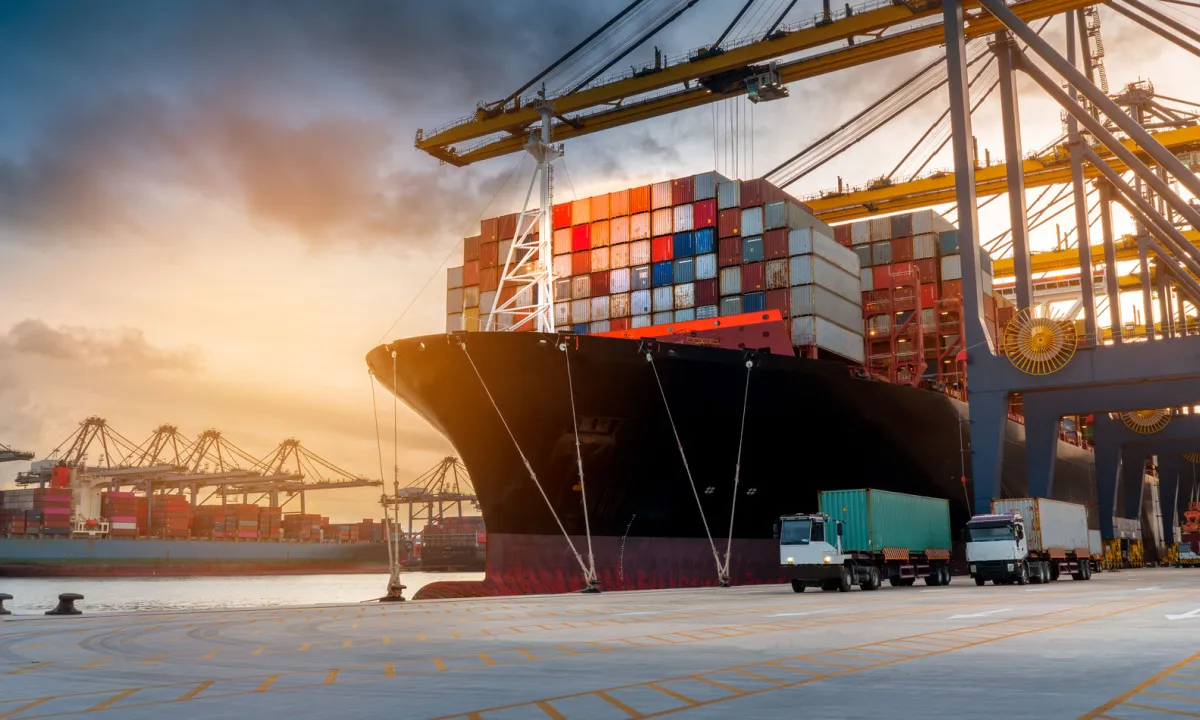
Considering the share of freight it transports each year, the container shipping industry can rightfully be called a vital cog in the global economy. Another fact is the amount of turmoil and transformation this sector has experienced during the recent years. COVID-19 – if not created – surely catalyzed profound disruptions in various forms that have further exacerbated. 4 years down the dimensions of time, the industry still grapples with significant challenges. This feature story delves into the multifaceted issues impeding the recovery of the container shipping sector, drawing insights from leading industry experts.
Container shipping has maintained its position as the global economy’s spine over decades at a stretch. Yet, it finds itself in a state of persistent turmoil nearly four years after COVID-19’s onset.

I don’t deny the display of resilience by the container shipping industry over the years since the pandemic. But I can neither deny that it remains beset by a myriad of challenges that have held back its full recovery.
The intricate dance of demand and supply of containers, which was once finely balanced, now teeters on the edge due to a confluence of geopolitical tensions, economic instability, and lingering pandemic-induced disruptions.
Looking back half a decade, the container shipping industry suffered from overcapacity leading to mergers & acquisitions before the pandemic. In 2020, COVID-19 led to dramatic fluctuations in shipping demand, port congestion, and a sudden surge in freight rates. We suddenly found ourselves wanting for capacity.

Sunil Vaswani (Executive Director, Container Shipping Lines Association) shares, “This was due to the higher demand for space & equipment on the one hand and the vessels & equipment getting stuck at ports due to the lockdown, on the other.”
Fast forward to 2024, the container shipping industry grapples with multiple new and evolving challenges. Vaswani explains, “Shipping lines went in for increased capacities which eventually more than met the demand during the latter part of the pandemic & postpandemic and brought the freight rates down to almost the pre-pandemic levels.”
This volatility is further exacerbated by fluctuating commodity prices and volatile currency exchange rates.
Geopolitical Risks
In the present times, international relations have grown to be ever more complex and the fate of the global economy rests on an intricate web of geopolitical risks and economic instability. The global supply chain is currently a volatile and unpredictable environment that disrupts trade, investment, and economic development.
“Ocean freight container shipping has once again been plunged into turmoil with severe port congestion, equipment shortages, and spiraling freight rates bringing inevitable comparisons with the chaos of the pandemic. But while the symptoms may be similar to the pandemic period, the cause of the latest disruption must be viewed within the context of the specific economic and geopolitical circumstances of 2024,” says Philip Hennessey (Director of External Communications and Industry Analysis, Xeneta).
Vinay Paulose (Chief Executive Officer, VS&B Container Group) agrees, “The underlying causes this time around are quite different.”
One of the primary ways in which geopolitical risks can lead to economic instability is through disruptions to trade and investment. As political tensions escalated over time – especially due to the Red Sea crisis – countries imposed sanctions, tariffs, or other trade restrictions on their adversaries. This has disrupted ocean shipping to a wide extent, leading to skyrocketing shipping freight rates.
On the 14th of May 2024, the U.S. announced new increases in trade tariffs on USD 18 billion worth of Chinese imports, covering key strategic industries like electric vehicles, solar panels & semiconductors. Vaswani adds, “This, in turn, has resulted in a scramble for space at Chinese ports for shipments to the U.S.. Therefore, containers tend to get rolled at load ports for a week or two.”
The continuity of geopolitical challenges has reduced the ability of container shipping to recover from disruptions.
Christian Roeloffs (Managing Director of Container Xchange) emphasizes the persistent volatility in the container shipping industry. The recent container market forecast by Container xChange highlights the rising volatility in container rates across Asia, driven by cautious restocking by retailers, improving freight demand, and capacity constraints resulting from Red Sea diversions. This surge is indicative of the broader economic instability plaguing the industry.
Roeloffs says, “The ongoing conflicts, such as the Iran-Israel conflict, evolving trade relationships, and persistent climate-related disruptions, contribute to the industry’s instability.”
These factors compel businesses to fortify their supply chains against disruptions, leading to erratic demand for shipping services. High interest rates and inflationary pressures further constrain consumer spending power, complicating the industry’s recovery.
Excess Inventory
The pandemic-induced supply chain disruptions led many businesses to overstock inventories to buffer against future uncertainties. This cautious approach has resulted in excess inventory levels, particularly in the retail sector.
While this indicates preparedness to meet demand surges, it stifles the need for new shipments, contributing to the container surplus. This paradox is highlighted by Roeloffs, who points out that high inventory levels suppress immediate shipping demand, exacerbating the industry’s recovery challenges.
“The temporary spike in shipping volumes observed recently, driven by businesses pulling shipments forward to avoid future disruptions, is not reflective of a robust, sustained demand,” shares Roeloeffs.
Consumer behavior has also shifted markedly in the post-pandemic era. Despite an initial surge in spending as economies reopened, the momentum has waned. High interest rates and inflation – the results of economic instability – have tempered consumer confidence, leading to modest growth in retail inventories and a sluggish rise in new orders for manufactured goods. This weak spending directly impacts the demand for shipping services.
This is an abridged version of the Special Feature published in the July edition of the Logistics Insider Magazine. To read the complete feature, click here.