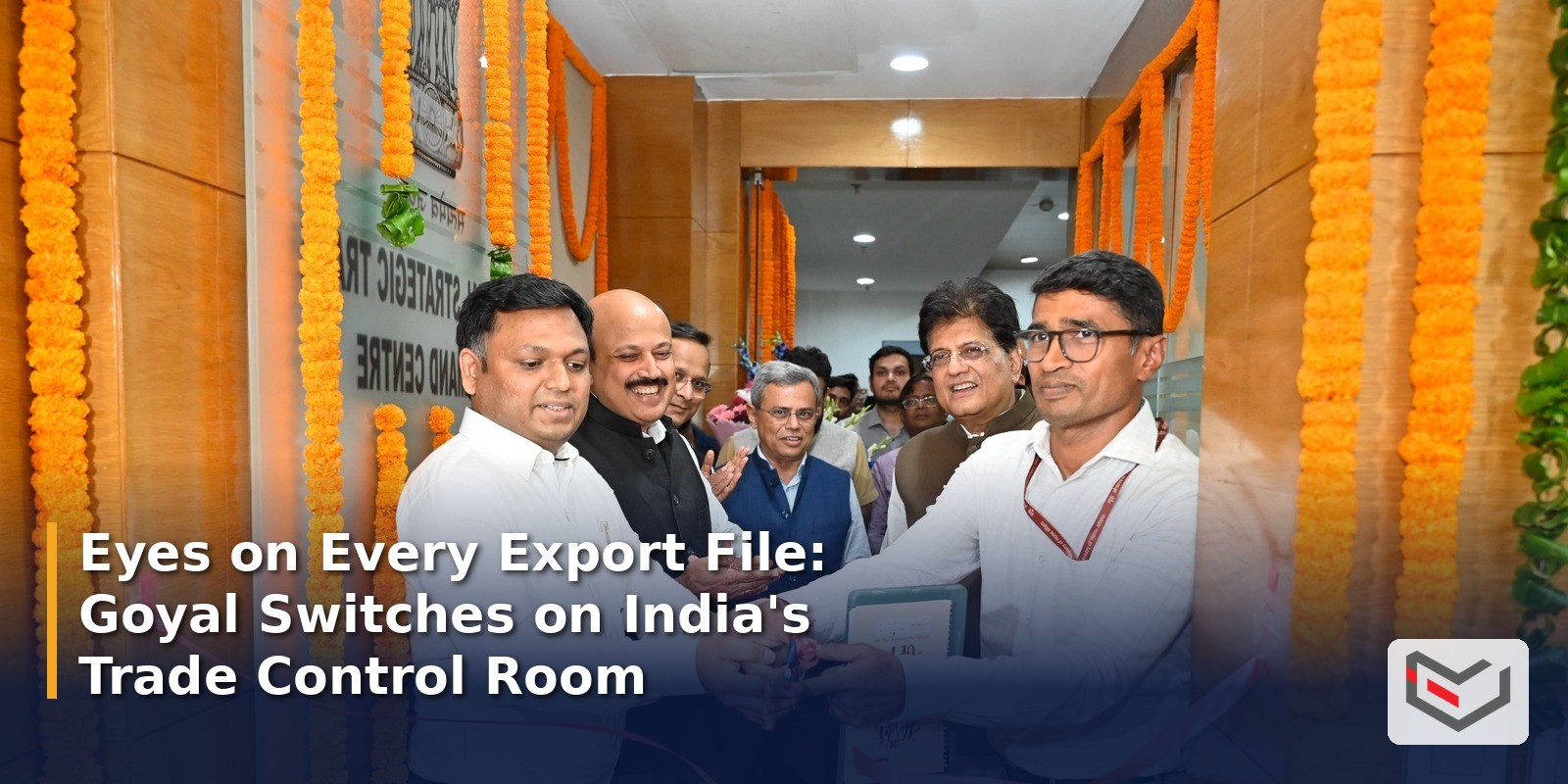
The Commerce Ministry now has one room from which officials can watch, almost as it happens, how India’s trade is doing and where export files are getting stuck. Commerce and Industry Minister Piyush Goyal opened the National Strategic Trade Command Centre (NSTCC) at Vanijya Bhawan on October 15. One of the first screens the initiative looked at was the one for SCOMET (Special Chemicals, Organisms, Materials, Equipment and Technologies), the list of sensitive dual-use items that need a special licence to export, where applications have been piling up. The ministry asked the Inter-Ministerial Committee that clears these licences to meet more often, every week if required, and dispose of pending cases quickly. The centre has been put together by the Department of Commerce. It pulls in data that until now sat in separate systems and lays it out on dashboards. An officer can start with the country’s overall trade numbers and narrow down to one regional office, one scheme, a product, a market, or a single application.
The first phase covers the main services Directorate General of Foreign Trade (DGFT) handles: the Importer Exporter Code (IEC), Advance Authorization, the Export Promotion Capital Goods (EPCG) scheme, Certificates of Origin, SCOMET licences, and goods whose import or export is restricted. Officials will be able to see how much each scheme is used, how long files take, whether exporters are meeting their export obligations, and which regional offices are falling behind. According to the ministry, the aim is to spot problems early, measure how schemes and offices are performing, and use the data to cut down on procedures that keep tripping exporters up. The centre will also look at trade product by product and market by market, track how far India’s trade agreements are being used, and point to new export opportunities.

What it means for exporters
Businesses won’t be logging in, at least for now. The ministry has pitched the NSTCC as a tool for policymakers and officials. But anyone who deals with DGFT regularly is likely to feel the effects. Pending applications are where it should show first. Once every IEC, Advance authorization, EPCG or SCOMET file appears on a dashboard with a count of how long it has been waiting, delays at a regional office become harder to ignore. Exporters with a file stuck somewhere would do well to keep their application numbers handy and follow up. Officials can now see exactly where it is held. Export Promotion Councils are among the bodies due to get access later. That gives firms a good reason to take problems to their council, with details, rather than simply grumbling about them. A complaint that can be checked against hard numbers is harder to brush aside.
Certificates of Origin are part of the first phase too, and the centre will track how well trade agreements are being used. Plenty of exporters still don’t claim the lower duty they are entitled to in partner countries. It is worth checking whether your products qualify. Smaller firms, which rarely have the means to do their own market research, could gain from the product and market analysis if the ministry shares it widely. Watch DGFT notices, export council circulars and the Trade Connect ePlatform, which the NSTCC is built on.
There is a flip side. Export obligations under Advance Authorization and EPCG will now be monitored all the time, not just when the period ends. Firms that keep their paperwork in order will have an easier ride. Those that slip will be noticed sooner. Over time, the ministry plans to bring in data from other departments and add automated alerts and deeper analysis. Other ministries, state governments and export councils will get access in stages.

For exporters, the test is simple: do their files move faster? The SCOMET backlog, raised on the very first day, will be the early test.

This article is authored by Professor Sandeep Yadav, Strategy Area, IIM Bangalore.
Disclaimer: The views expressed in this article are those of the author and do not necessarily reflect the views of Logistics Insider.