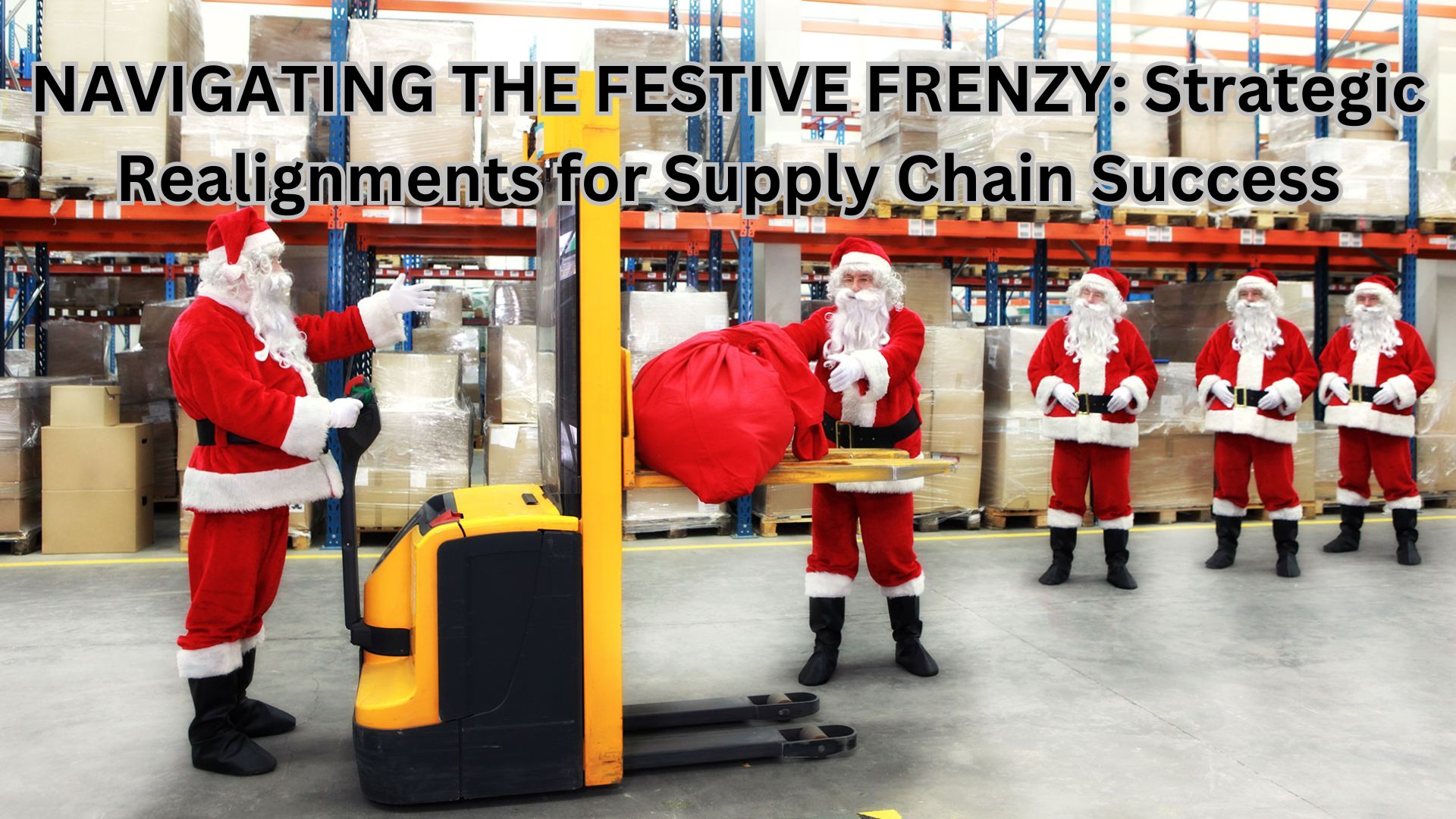
The stretch from August through December is a time when India comes alive with vibrant celebrations – from Raksha Bandhan to Diwali and Christmas. During, and even before, the festive season, warehouses brim with inventory, and delivery fleets race against time, ensuring that every gift and essential item reaches its destination without delay. This holiday season, like the last, is set to challenge and redefine India’s logistics and supply chain landscape. As consumer demand surges, businesses must innovate, adapt, and leverage advanced technologies to meet heightened expectations.
This story delves into the strategic realignments necessary for businesses to thrive during the most critical shopping period of the year. We’ll explore how to overcome challenges, optimize operations, and transform festive chaos into a period of operational excellence and increased profitability.

Growing up in a nation as diverse as India, you quickly learn that celebration isn’t just a part of life – it’s a way of life. As soon as it’s Festive O’Clock, the country lights up with high spirits, embracing the promise of new beginnings, joyful moments, and, of course, the thrill of finding the perfect gifts for your loved ones.
But behind every beautifully wrapped present and every festive delicacy lies an intricate web of logistics and supply chain working tirelessly to bring these moments to life.
I remember as a child, I would wait eagerly to unwrap the gifts sent to me by my brother from the south of India. Little did I know, the journey those presents took was as significant as the joy they brought. As I stand as a small part of this vast world of logistics, I have come face-to-face with what the industry calls ‘festive chaos’ – a perfect blend of challenges and opportunities.

Starting in August, India’s supply chain industry braces for the ultimate litmus test – a period of intense activity that challenges businesses to innovate, adapt, and deliver. During this time, managing pre-festive inventory challenges, handling surges in orders, and ensuring timely deliveries become top priorities for businesses striving to exceed customer expectations.
Emphasizing the critical nature of this period, Prediman Koul (CEO, Jeena & Company) states, “The holiday season presents a prime opportunity for businesses to capitalize on increased demand, making it essential to realign logistics operations during this period. The surge in orders can place significant strain on supply chains, requiring a strategic approach to resource optimization, including warehouse space and transportation efficiency. Effective management of these elements ensures timely deliveries, a critical factor in maintaining customer satisfaction and brand reputation.”
He also highlights the importance of being prepared for unexpected challenges, saying, “The potential for unforeseen disruptions, such as those seen in the Red Sea crisis, highlights the importance of proactive planning. Enhancing communication and tracking systems allows businesses to swiftly adapt to challenges, minimizing delays and mitigating the impact on operations. By anticipating potential disruptions and adjusting logistics strategies accordingly, companies can not only meet but exceed customer expectations, turning the holiday rush into a period of both operational excellence and increased profitability.”
As Shiben Chakraborty (Head of Operations, V-Logis) further elaborates, “India’s festive season is a unique blend of cultural diversity and economic opportunity, bringing distinct consumer demands influenced by regional customs, economic factors, and evolving consumer behavior.”
He notes that meeting and exceeding customer expectations during this period involves overcoming challenges such as labor availability, pressure from increased sales by e-commerce giants, and the complexities added by the nation’s diversity.
Thus, making our festive dreams a reality and ensuring that the essence of our celebrations reaches us intact, requires immense coordination, planning, and dedication. Every link in the chain must realign to meet the demands of the season, turning the Holidays into Holiyays.
Holiday’24: What’s the Demand of the Season?
The 2024 holiday shopping season is set to bring a blend of challenges and opportunities, with expectations of a revival in India’s consumption. Experts from RedSeer predict that Festive Season 2024 will play a crucial role in boosting consumption, driven by easing inflation, rising wages in rural areas, and pent-up consumer demand.
The festive period is anticipated to offer higher discounts and strong performance in both masstige and premium segments, benefiting retailers and e-commerce platforms alike.
E-commerce is expected to capitalize on these trends, with projections indicating a 20% increase in gross merchandise value (GMV) this year, following a 13% growth last year.
Dr. Karuna Shankar Pande (Vice President – India Logistics, Amazon), emphasizes the sector’s commitment to meeting the rising demand.
“During the festive season, we witness increased adoption of e-commerce across the country. We are committed to meeting the growing demand for fast, reliable delivery by leveraging our extensive fulfillment and delivery network. Each year, the festive period also presents significant seasonal job opportunities across our fulfillment centers, sort centers, and delivery network across the country. At Amazon, technology is integral to everything we do—from enhancing product search and recommendations for customers to optimizing our supply chain and scheduling customer deliveries. Our goal is to use technology to continually improve the customer and associate experience and meet their evolving needs.”
According to TeamLease Services, the e-commerce sector is poised for a 35% surge in sales during the festive season. To support this growth, the sector plans to hire 1 million gig workers and 250,000 contractual staff.
Businesses must step up to realign their operations by strengthening partnerships, integrating advanced technology, and prioritizing demand to fully capitalize on the festive surge.
Accurate Demand
Accurate demand forecasting is crucial for retailers to optimize their supply chains and meet customer expectations, especially during the holiday season. Effective predictions help prevent stockouts of popular items and overstocking of slow-moving products, thus avoiding lost sales and unnecessary capital tied up in excess inventory.
In today’s competitive business environment, traditional methods of managing supply chains and logistics are increasingly inadequate. Advanced artificial intelligence (AI) forecasting methods are revolutionizing this landscape by processing vast amounts of data with unprecedented speed and accuracy.
According to McKinsey, AI-based forecasting can reduce errors by 20–50%, cut lost sales and product unavailability by up to 65%, optimize warehousing costs with a 5–10% reduction, and slash administration expenses by 25–40%. Industries such as telecommunications, electric power, natural gas, and healthcare are already reaping the benefits of AI forecasting, with up to 50% of workforce tasks automated and cost reductions of 10 to 15%, all while enhancing operational resilience.
Complementing AI advancements, Vinayak Bhat (General Manager – India Sales, Bastian Solutions India) suggests that software technologies like Warehouse Execution Systems (WES) further amplify a business’s ability to fulfill orders and forecast growth.
WES function as a communication bridge between the enterprise resource planning (ERP) system and the hardware technologies on the warehouse floor, tracking inventory and throughput. The key to successful WES lies in the quality of the data input; accurate data leads to precise operational insights, enabling better order fulfillment and forecasting.
Bhat emphasizes the importance of effective planning for peak seasons and suggests following a proven 4-step process to ensure operational efficiency and customer satisfaction.
1. Analyze past performance: Review last year’s peak season to identify challenges such as equipment malfunctions, staffing shortages, and customer feedback. Document these insights to address recurring issues and enhance your strategy.
2. Conduct root cause analysis: Identify the underlying causes of problems rather than just addressing symptoms. Common issues may include inefficiencies in inventory management, order accuracy, and labor constraints. Understanding these root causes helps in formulating effective solutions.
3. Develop and Implement Solutions: Based on your analysis, implement targeted solutions. Utilize RFID for precise inventory tracking, adopt automation for order picking, and optimize warehouse layouts for efficiency. Address labor shortages with robotics and integrate a WES to improve processing.
4. Plan, Execute, and Maintain: Plan solutions implementation before peak season for smooth integration. Regular preventive maintenance keeps the system healthy. On site experts are crucial for handling critical issues during peak demand.
By leveraging AI and WES, businesses can significantly enhance their forecasting accuracy and operational efficiency, driving higher sales and customer satisfaction during the critical holiday season.
3PL
During the festive season, third-party logistics (3PL) providers play a crucial role in ensuring efficient and cost-effective distribution. As Dipanjan Banerjee (Chief Commercial Officer, Blue Dart) notes, “During high-demand periods, such as the festive season, third-party logistics (3PL) providers become essential. They manage increased volumes and complex supply chains, offering specialized services such as efficient storage, picking, packing, and shipping, which allows businesses to focus on strategic priorities while ensuring reliable distribution.”
This is an abridged version of the Cover Story published in the September edition of the Logistics Insider Magazine. To read the complete story, click here.