The container shipping industry has seen its fair share of high and low tides (figuratively and literally) during the last few years. In this ever-competitive world of global shipping, Mediterranean Shipping Company (MSC) and ZIM Integrated Shipping Services (ZIM Line) have emerged as the fastest-growing mainline operators, as highlighted in Alphaliner’s latest report. Both companies have demonstrated remarkable fleet expansions, solidifying their positions as key players in the maritime industry.
MSC, in the pursuit of growth, has expanded its fleet past the 6 million TEU threshold by combining aggressive newbuilding orders and strategic acquisitions of second-hand vessels. The operator’s latest addition is the 16,616 TEU MSC Juliette, delivered by Guangzhou Shipyard International on July 18. This vessel is the 17th largest Post-Panamax addition to MSC’s fleet this year alone. Last week as well, the company took delivery of the 1999-built MSC Unity VI and the 2003-built MSC Bay IV, further expanding its operational capacity.

Parallel to MSC, ZIM has also been showing commitment to long-term charters, enabling it to outpace Taiwan’s Yang Ming and secure the 9th spot in the rankings. The Israeli carrier’s fleet has grown by nearly 18% over the past year, reaching 728,011 TEU. This growth is attributed to the delivery of three 15,250 TEU ships, seven 7,800-7,900 TEU ships, and eight 5,300-5,500 TEU ships. Many of these vessels have been deployed on the transpacific lane – a sign of ZIM’s strategic focus on expanding its market presence in this crucial trade route.
The Alphaliner report noted, “Like all carriers that rapidly expanded their fleet with large mainline newbuildings, ZIM is indirectly profiting from Asia – Europe service re-routings via the Cape of Good Hope since these diversions helped absorb the newbuilding wave. All the fresh tonnage also allowed the Haifa-based carrier to expand its Transpacific footprint. Currently, 48% of ZIM’s fleet is trading between Asia and North America.”
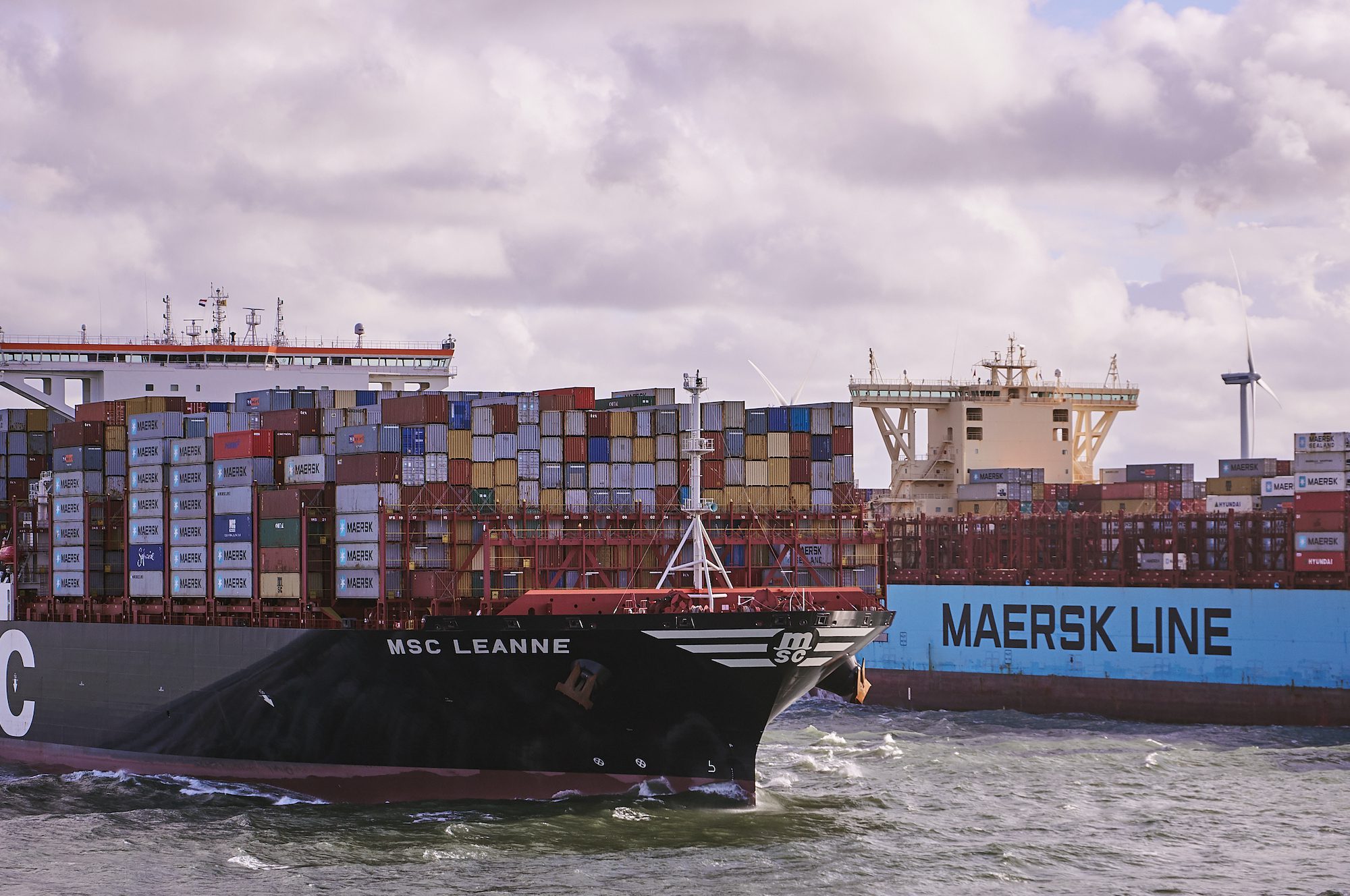
The rankings are also witnessing significant shifts among other major players. MSC dethroned Maersk Line in 2022, and now Maersk is poised to be relegated to third place as French carrier CMA CGM matches MSC’s orderbook. Both MSC and CMA CGM have newbuilding orders of 1.2 million TEUs.

Notably, CMA CGM has demonstrated its support for sustainable shipping by ordering a dozen 15,500 TEU LNG-fuelled vessels from HD Hyundai Heavy Industries and HD Hyundai Samho. On similar lines, has 14 methanol-fuelled 16,000 TEU ships on order at HD Hyundai Heavy Industries and is exploring additional orders for LNG-fuelled vessels to regain its competitive edge. CMA CGM’s current fleet stands at 3.75 million TEU, while Maersk’s fleet is slightly larger at 4.34 million TEU.
The rapid fleet expansions by MSC and ZIM Line underscore the dynamic nature of the shipping industry, where strategic investments and fleet modernization are crucial for maintaining competitive advantage. The competition among the top carriers is intensifying, with CMA CGM’s aggressive orderbook challenging Maersk’s position. The shift towards LNG and methanol-fuelled vessels highlights the industry’s increasing focus on sustainability and environmental responsibility. These developments are likely to drive further innovation and investment in green technologies, shaping the future of global shipping.