The World Bank in a recent statement made suggestions for India to move further up on its Logistics Performance Index and evolve into a global supply chain hub. The statement suggested more trade flow data be fed into the PM Gati Shakti NMP platform and skillsets of Indian youth be improved to achieve the target of becoming one of the top 25 countries in terms of logistics efficiency. To support the intangible, more of physical infrastructure like the multimodal parks needs to be set up.
From 2018 to 2023, India jumped a notable six ranks on the World Bank’s LPI and stood at 38th place among 139 nations. Since then, India has set the ambitious goal of ranking among the world’s top 25 nations by 2030. A major chunk of the game plan to achieve this target is bringing down the country’s logistics costs to 8-10% of GDP i.e. at par with the global standard.

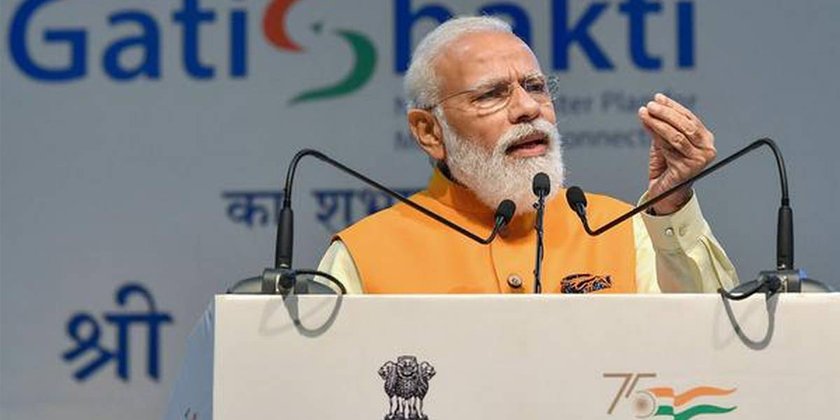
With all might and power, Prime Minister Narendra Modi launched the Gati Shakti National Master Plan on 13 October 2021 to help India achieve the USD 20 trillion economy dream by 2040. The ambitious program has been hailed as the infrastructural game-changer. Over 900 layers of data of Central Ministries and 654 layers of data of States are available at the click of a button.
A national infrastructure master plan envisages a centralized portal to unite the infrastructural initiatives planned and initiated by as many as 16 central ministries and departments, which will give them visibility of each other’s projects. The Prime Minister’s holistic vision for India’s infrastructural transformation includes state-of-the-art infrastructure, multi-modal connectivity, reduced logistics cost and turnaround time, efficient movement of goods and people, and enhanced ease of doing business.
While the Gati Shakti platform is already processing the aforesaid data, the World Bank suggests that it can be overlaid with information on trade flows across the country. This includes the information from GST Network and E-Way bills as well. According to the World Bank, this will equip the planners to mine the plethora of data and work on segments where infrastructure needs to be improved.

Multi-Modal Logistics Parks are an integral part of the Gati Shakti National Master Plan. The Gati Shakti plan envisions the development of 35 MMLPs across India, strategically located to maximize their impact. Each MMLP is to be developed with state-of-the-art infrastructure, ensuring efficient handling and storage of goods. The World Bank suggests that MMLPs planned with connectivity to railway corridors can serve as warehouses and data centers, attracting private sector service providers and investors, while giving manufacturers last-mile connectivity.
Gati Shakti puts a special emphasis on education & skill development to ensure a ready workforce capable of meeting the demands of the modern infrastructure and logistics sector. This is in alignment with the World Bank’s suggestion to make the country’s youth equipped with the skills needed by the dynamic industry. Women can benefit from new jobs, especially in softer skills such as packaging, sorting, and warehouse management. To that end, the Logistics Sector Skill Council is already training workers in newer technologies to help them become full-fledged logistics professionals.
The World Bank has been assisting India with numerous rail, road, and inland waterway projects. In addition to these efforts, it is aiding the country in enhancing digitization, improving trade services, and developing skills to meet the demands of this rapidly evolving industry.
According to the World Bank, India’s drive to enhance its logistics performance will not only boost trade competitiveness but also create jobs and position the country as a logistics hub for the region and beyond.